
Formula 1 represents the most advanced level of automotive engineering in the world. Every detail of a car is designed to extract the maximum possible performance, combining physics, technology, and strategy in an extreme environment.
Unlike regular cars, which focus solely on efficiency and comfort, a Formula 1 car is designed for absolute performance. This means operating at the limits of materials, aerodynamics, and control.
While a regular car tries to reduce air drag, an F1 car does something far more advanced: it uses air as a tool to generate downforce, dramatically increasing grip on the ground. Aerodynamic drag is the force that air exerts against a moving object.
A Formula 1 car can take corners at speeds exceeding 250 km/h — something impossible for ordinary cars.
But how is that possible?
Important.
-
The drag:
- reduces the maximum speed
- increases energy/fuel consumption
- hinders acceleration
- Car shape
- Frontal area
- Speed
- Air density
- Regular cars try to minimize drag as much as possible to save fuel.
- They can handle a bit more drag.
- In exchange for MUCH more downforce.
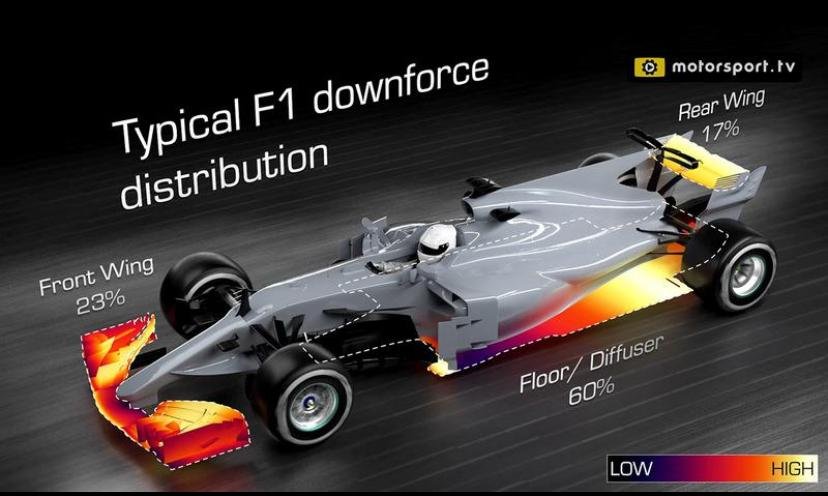
2.O downforce
It is an aerodynamic force that pushes the car against the ground while it is in motion.
Imagine an airplane:
- The wings generate the force to rise (lift).
Now reverse that:
- In F1 cars, the wings are designed to push the car downwards.
Downforce comes primarily from three parts:
- They direct the airflow.
- They create a pressure difference.
- They push the car down.
- The air accelerates beneath the car.
- Controls the air coming out from under the car.
- Maintains efficient flow.
Okay:
- Too much downforce = great in corners, bad on straights.
- Low downforce = fast in a straight line, unstable in corners.
What is aerodynamics in Formula 1?
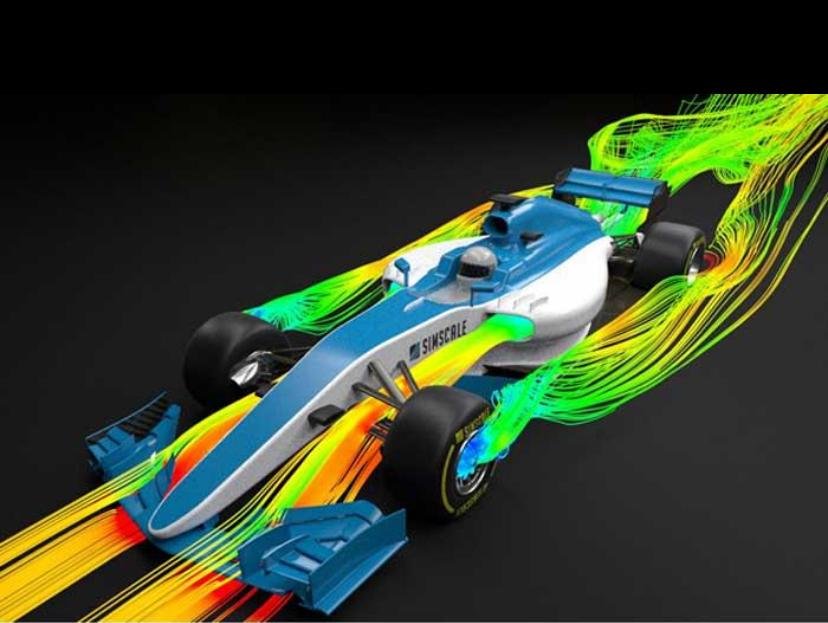
CFD Simulation
Aerodynamics is the study of how air interacts with a moving car.
In Formula 1, it has three main objectives:
- Reducing drag increases top speed.
- Generate downforce → increase grip
- Control the airflow around the car.
👉 Unlike a regular car, an F1 car doesn’t just want to cut through the air — it wants to manipulate the air.
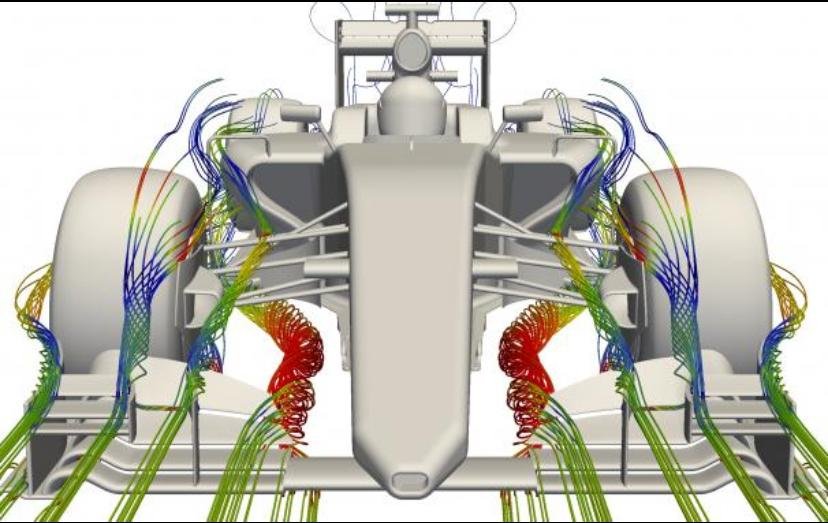
CFD (Computational Fluid Dynamics) allows you to simulate the behavior of the air around a car even before it physically exists.
The engineers analyze:
- How does air pass through the wings?
- Turbulence generated behind the car
- Pressure on surfaces
- Component cooling
👉 A gain of 0.1 seconds per lap can mean the difference between victory and defeat.
Structural strength:
In addition to being fast, the car needs to be extremely durable.
💡 What is FEA?
FEA (Finite Element Analysis) is a technique that divides a part into thousands of small elements to simulate forces and stresses.
 Applications in Formula 1:
- Carbon fiber chassis
- Suspension
- Brakes
- Impact structures
- Testing wing strength
- Ensuring that parts do not break at high speed.
- Simulate extreme forces
⚠️ Extreme conditions:
- Curves: up to 5G of lateral force
- Brutal braking
- Constant vibrations
- Example:
- The rear wing experiences enormous forces at 300 km/h.
- It needs to be lightweight + extremely durable.
👉 Without FEA, the car wouldn’t be able to handle a full race.
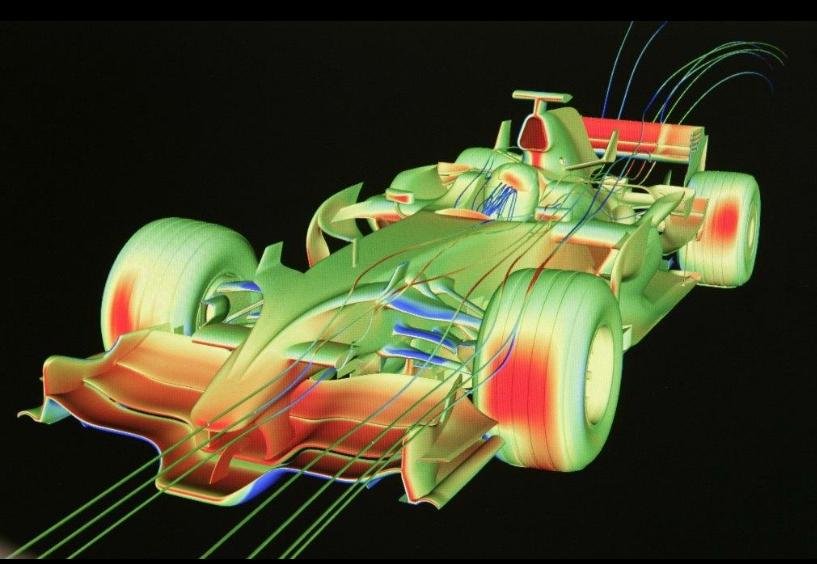
FEA Simulation
Main aerodynamic components
🪽 (Front Wing )
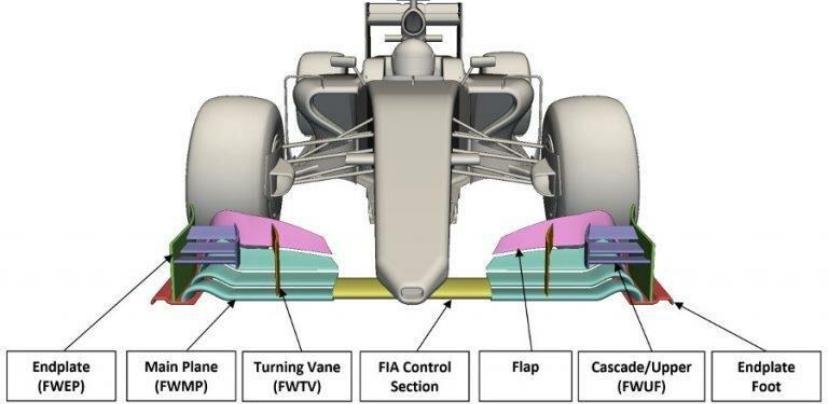
Functions:
- Direct the airflow to the rest of the car.
- Create downforce at the front.
👉 Engineering:
- Small changes → big impact on performance
🪽 (Rear Wing)
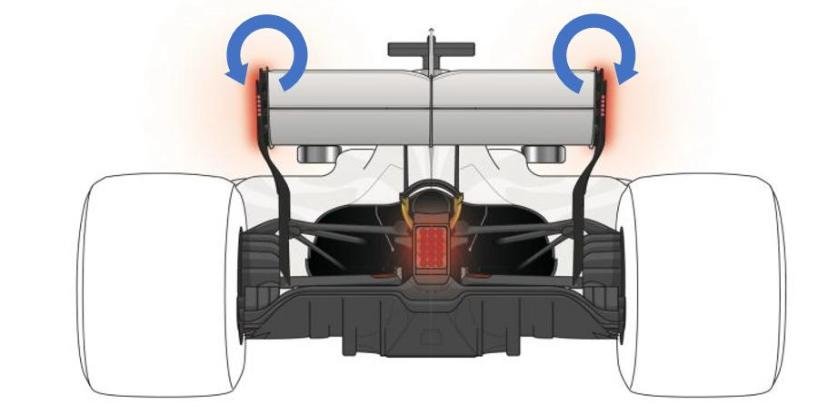
Functions:
- Generate downforce at the rear
- Stabilize the car
👉 Important technology:
- DRS (Drag Reduction System) → reduces air resistance on straightaways
Diffuser
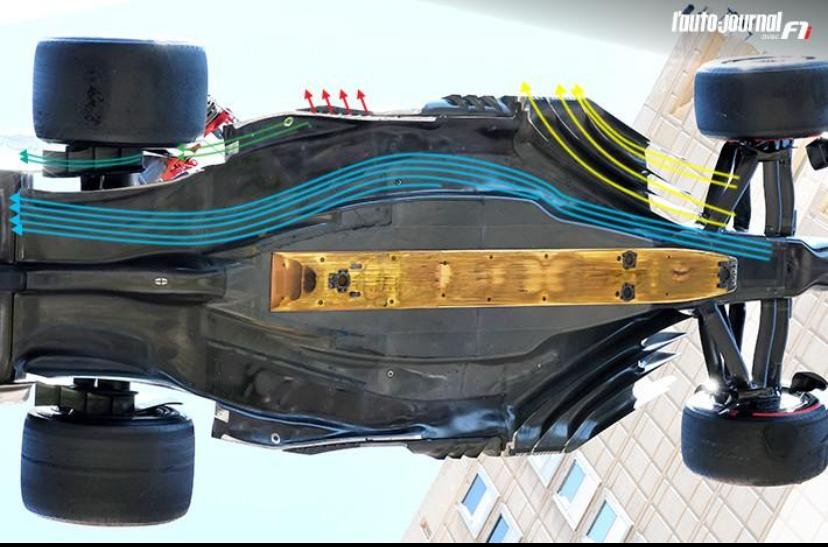
One of the most important parts:
- It accelerates the air passing under the car.
- Creates a ground effect.
- It generates a LOT of downforce without increasing drag as much.
How much does a Formula 1 car cost?
- Car: ~$15 million
- Team budget: ~$135 million
- Aerodynamic development: millions per year
Fuel consumption
A Formula 1 car consumes approximately:
- 110 kg of fuel per race
The fuel is highly optimized for performance, but still adheres to strict regulations.
The fuel used in Formula 1 is officially called:
F1 Fuel (FIA-approved fuel)
More commonly used technical name:
👉 Formula 1 E10 gasoline
🔬 What does E10 mean?
- E = ethanol
- 10 = 10% ethanol in the mixture
👉 i.e:
90% gasoline + 10% ethanol
Curiosity :
The FIA requires that the fuel be close to that used on the road precisely for this reason:
👉 transferring F1 technology to regular cars
Race strategy: where victory is decided
Even with the best car, without strategy there is no victory.
📊Critical decisions:
- When to stop at the pit stop
- Which tire to use
- Fuel management
- Response to weather conditions
🛞 Types of tires:
- Soft → faster, high wear
- Average → balance
- Duro → more durable, but slower
The steering wheel:
An F1 steering wheel has dozens of configurations:
- Power adjustment
- Differential control
- Brake balancing
👉 The driver makes adjustments in real time during the race.
🛠️ Post-race
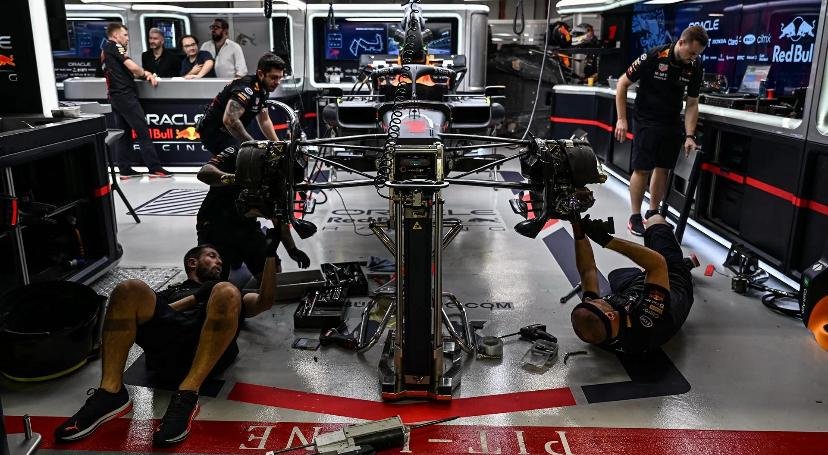
After each race, the car undergoes a complete inspection:
- Data collection
- Structural inspection
- Aerodynamic adjustments
- Parts replacement
Conclusion
Formula 1 cars don’t win races just because of their speed—they win because they represent the perfect combination of science, engineering, and strategy.
Each component is designed with extreme precision: aerodynamics controls the air, FEA ensures structural strength, hybrid engines deliver maximum power, and strategy transforms performance into results.
However, the real difference lies in the integration of all of this. A small gain in any area can mean the difference between winning and losing.
👉Formula 1 is, above all, engineering pushed to its limits.
More importantly, these same techniques aren’t restricted to the racetrack.
They are applied every day in real-world projects to:
- validate parts before manufacturing
- reduce costs
- improve performance
- avoid failures
Engineering simulation services
-
Do you need to validate your project with engineering simulations?
I am offering entry-level simulation services using:
✔️ FEA (basic structural analysis)
✔️ CFD (basic flow simulation)👉Ideal for:
* concept validation
* initial project analysis
* preliminary studies -
Focused on initial validation and performance optimization.
-
👉 Contact us for custom projects.
- If you want to learn more about engineering, simulation, and technology, follow the blog — new content is published every week.
Frequently Asked Questions about Formula 1 (FAQ)
How much does a Formula 1 car cost?
A: A Formula 1 car can cost around US$15 million, not including development and team costs, which raise the total cost to over US$100 million per season.
How many horsepower does a Formula 1 car have?
A: A modern Formula 1 car has approximately 950 to 1,000 horsepower (HP), combining a combustion engine with hybrid electric systems.
What is “horsepower” (HP)?
A: Horsepower (HP) is a unit that measures the power of an engine, that is, its ability to generate force over time.
👉In simple terms:
The more horsepower → the more power and acceleration the car has.
What is the top speed of a Formula 1 car?
A: The top speed can exceed 350 km/h, depending on the circuit and the car’s aerodynamic configuration.
Why do Formula 1 cars corner so fast?
A: Because they generate a huge amount of downforce, which increases the grip of the tires on the ground, allowing for high-speed cornering without losing control.
What is downforce in Formula 1?
A: Downforce is an aerodynamic force that pushes the car against the ground, increasing stability and grip, especially in corners.