Introdução

Airplanes represent one of the greatest achievements of modern engineering. They connect continents, transport millions of people daily, and make possible something that seemed impossible just over a century ago: flying safely for hours at thousands of meters of altitude.

But behind this apparent simplicity lies an extremely complex system, involving aerodynamics, advanced materials, high-efficiency engines, and strong integration with the financial sector.

In this article, you will understand clearly and technically:

* How an airplane manages to take off and stay in the air
* What technologies are used in its construction
* How much fuel a flight actually consumes
* How much it costs to operate an aircraft
* And how engineering directly influences the financial sector of aviation

The Physics of Flight: The 4 Fundamental Forces

For an airplane to fly, four main forces act upon it:

1. Lift

Lift is the force that lifts the airplane. It is generated by the wings when air passes over them.

The shape of the wings causes the air to move faster on the upper surface and slower on the lower surface. This creates a pressure difference that “pushes” the airplane upwards.

2. Weight

This is the force of gravity pulling the airplane downwards. Everything on the airplane contributes to the weight:

* Structure
* Fuel
* Passengers
* Cargo

3. Thrust

This is the force produced by the engines, which pushes the airplane forward.

4. Drag

This is the air resistance against the airplane’s movement.

The secret of engineering is simple: generate more lift and thrust than weight and drag.

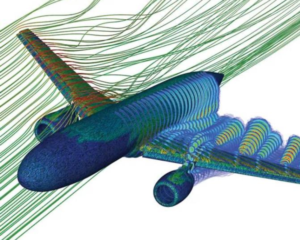
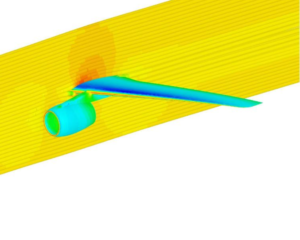
Lift is the force that allows an airplane to overcome gravity. It occurs due to the pressure difference generated by the airflow around the wing.

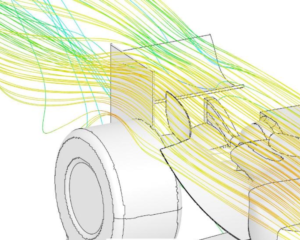
In computer simulations (CFD), it is possible to clearly visualize:

* Air accelerating on the upper part of the wing
* Lower pressure on top
* Higher pressure below

👉 This creates a net upward force.

This type of analysis is essential in modern engineering to optimize performance without needing to physically test every variation.

Aerodynamics: The Secret of Wings

The wings are designed with a shape called an airfoil profile.

This shape allows for:

* Reduced drag
* Maximized lift
* Improved fuel efficiency

In addition, modern aircraft have:

* Flaps (increase lift during takeoff and landing)
* Slats (improve airflow)
* Winglets (reduce turbulence at the wingtips)

👉 This allows an aircraft to make high-speed turns with stability.

wing aerodynamics

Aerodynamics is the factor that defines the efficiency of an aircraft.

Important components:

* Flaps: increase lift at low speeds
* Slats: improve airflow
* Winglets: reduce induced drag (vortices at the wingtips)

Simulations show that winglets can reduce fuel consumption by up to 5%.

👉 Small aerodynamic improvements generate millions in savings over time.

Materials and Structure

A engenharia moderna utiliza materiais avançados para equilibrar resistência e leveza.

Principais materiais:

* Alumínio aeronáutico → leve e resistente
* Fibra de carbono → extremamente leve e forte
* Titânio → usado em partes críticas

Um exemplo: o Boeing 787 possui cerca de 50% da estrutura em materiais compostos.

Materials of the Future:

* Graphene: extremely lightweight and strong
* Smart materials: that adapt to the environment
* Advanced shape memory alloys

And the Moon?

Lunar exploration can contribute to:

* Extraction of helium-3 (future energy)
* Use of lunar regolith to develop new resistant materials
* Testing in extreme environments (vacuum and radiation)

👉 This can directly influence the development of lighter and stronger aircraft in the future.

Engineering Simulations

Before any airplane flies, it goes through thousands of simulations.

✔️ FEA (Finite Element Analysis)

* Tests structural resistance
* Simulates stresses and deformations
* Prevents critical failures

✔️ CFD (Computational Fluid Dynamics)

* Simulates air behavior
* Reduces drag
* Optimizes fuel consumption

👉 This reduces real-world costs and increases safety

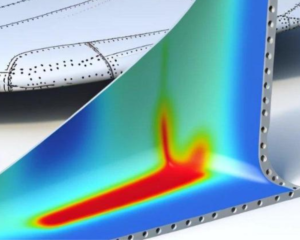
FEA - structural analysis

FEA allows you to:

* Simulate stresses
* Predict failures
* Optimize structure

CFD - Fluid Dynamics

CFD allows you to:

* Visualize airflow
* Reduce drag
* Improve efficiency

Aircraft Engines (and materials)

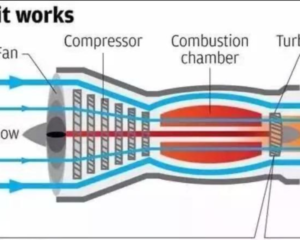
Modern aircraft engines are turbofans.

How they work:

1. Air enters from the front
2. It is compressed
3. Mixed with fuel
4. Burned
5. Expelled to the rear → generates thrust

Characteristics:

* High energy efficiency
* Relatively low fuel consumption
* Ability to generate tons of thrust

Aircraft Engines (and materials)

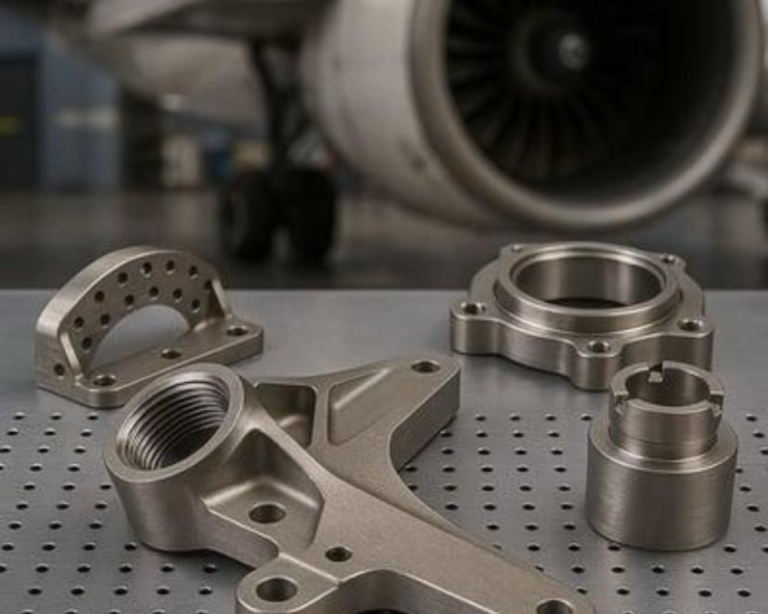
Turbofan engines are made of extremely advanced materials:

Main materials:

* Nickel superalloys → withstand high temperatures
* Titanium → lightweight and strong
* Advanced ceramics → extreme thermal resistance

Internal temperatures can exceed 1,500°C.

👉 Without these materials, the engine would simply melt.

Fuel Consumption (actual values)

A long-range aircraft (e.g., Boeing 777) consumes approximately:

* 5 to 7 tons per hour
* 60 to 100 tons per long flight

Fuel type:

👉 Jet A-1

Why does this matter?

Because fuel represents:

👉 up to 30%–40% of an airline’s costs

i.e

An airplane like the Boeing 777:

* Consumes 5 to 7 tons per hour
* A 12-hour flight → approximately 70 tons of fuel

💰 Estimated cost:

* 1 ton ≈ US$ 800 to US$ 1,200
* A complete flight can cost:

👉 US$ 50,000 to US$ 100,000 in fuel alone


What Happens After Landing

After landing, a highly organized process called turnaround takes place:

Steps:

1. Visual inspection of the aircraft
2. Tire and brake check
3. Electronic systems check
4. Refueling
5. Interior cleaning
6. Crew change
7. Loading of baggage and cargo

👉 In efficient airports, all this occurs in 30 to 60 minutes

The Future of Aviation (and its connection to the Moon)

Trends:

* Electric airplanes
* Sustainable fuels (SAF)
* Artificial intelligence
* Ultra-lightweight materials

And the Moon?

Space technology can directly impact aviation:

* New materials tested in extreme environments
* More efficient energy
* Advanced navigation systems

👉 The future of aviation is connected to space exploration.

What Happens When a Plane Reaches 10,000 Feet?

When an airplane reaches approximately 10,000 feet (about 3,000 meters), it enters a more stable phase of flight. This moment marks the end of the initial climb, considered the most critical part of the journey.

From this altitude, the engines reduce their maximum takeoff power and operate in a more efficient mode, reducing fuel consumption and component wear.

It is also at this point that the aircraft assumes a more optimized aerodynamic configuration, with flaps fully retracted, allowing for better performance and less air resistance.

For passengers, this change is noticeable. The seatbelt sign is usually turned off, allowing greater freedom of movement, and in-flight service can begin. The cabin environment becomes quieter and more comfortable.

Engineering + Finance:

Aviation is not just engineering — it’s a highly strategic business.

Main costs of a flight:

* Fuel
* Maintenance
* Crew
* Airport fees
* Insurance

A single international flight can cost:

👉 US$100,000 to US$300,000

How do companies profit?

* By optimizing routes
* By reducing fuel consumption
* By increasing passenger occupancy

Conclusion

Modern aviation is the result of the union between:

* Advanced engineering
* Computer simulations (FEA and CFD)
* High-tech materials
* Complex financial strategies

Each flight is not just transportation—it’s a highly optimized operation involving millions of dollars, decades of research, and constant innovation.

👉 From wing design to fuel, everything is designed to maximize efficiency, safety, and performance.

And with technological advancements—including contributions from space exploration—the future promises even more efficient, sustainable, and intelligent aircraft.

Curiosidade

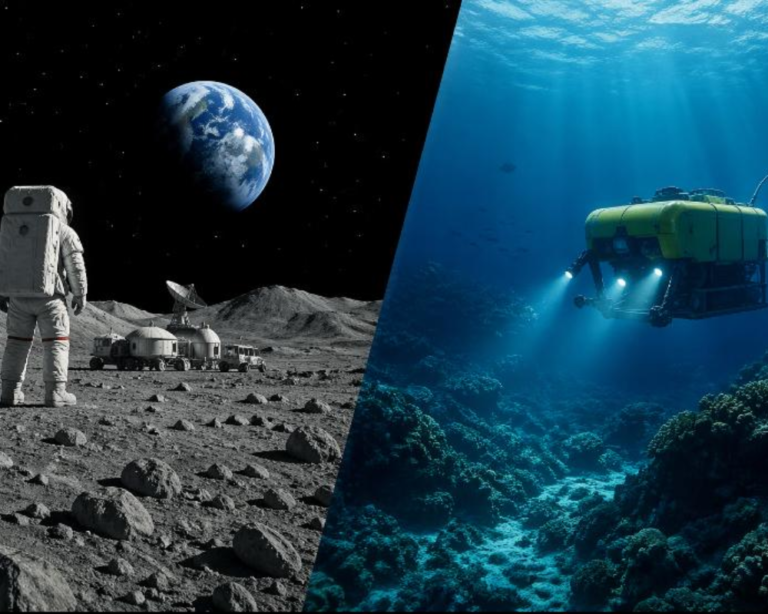
Does the future of humanity lie in exploration beyond Earth, such as the Moon, or in solutions we can still find here on our own planet, such as in the oceans?

moon or oceans
Rolar para cima